FAILURE IS THE POINT
AUTHOR: LABTECH
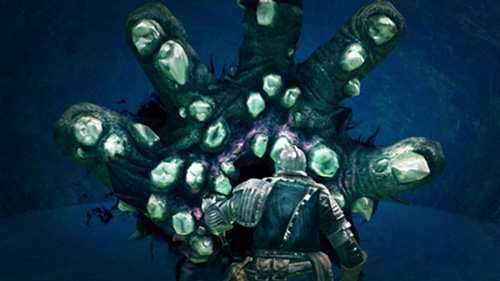
I don't think he wants a hug
Maybe some of you are too young to remember this, but I remember a time when video games were hard. I'm not talking about 'oh, this gun/sword/spell isn't powerful enough to one-shot this enemy', or 'I'm having a tough time in this one choke point', I'm talking about 'I not only want to throw my controller against the screen, I'm fairly confident I'm angry enough for it to come out the other side'. Somewhere along the way, routine difficulty fell to the wayside, and I feel this is to the detriment of the gamer.
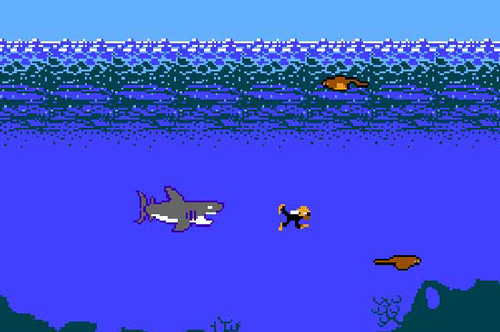
I remember getting Jaws for the NES when I was about 7 or 8, and I don't think I saw the end credits until I was well into my teens, and the game consists of 4-5 screens tops. The difficulty stems from the fact that the main antagonist, Jaws, has a ton of hit points, and only a limited amount of time per turn to go through them. In the beginning it's literally impossible to kill him, and the only way to power up your weapon is to collect shells and take them to bases on the main world map, not easy when you can hit random reefs and Jaws is chasing you everywhere. Even when you 'kill' Jaws, the game isn't over, as the game then moves into a final phase wherein you can kill Jaws for realsies if and only if you can force him out of the water and spear him with your boat in the same motion.
This was true for many, if not the bulk of, the NES library, but it was actually a worthwhile experience for me growing up. It developed hand/eye coordination, trained me on making intelligent choices, and instilled the lesson that making hasty decisions could lead to game over.
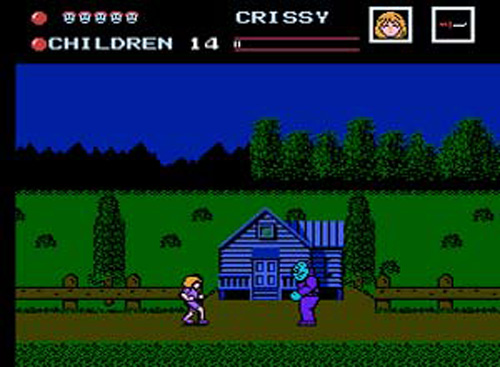
Another staple of my early childhood gaming experience was Friday the 13th, which still brings back fond memories with friends trying to beat Jason. Difficulty stems from the fact that from the moment the game starts, Jason is an ever present threat to your well being. Unlike other games of the time that had bosses as discreet encounters, Jason could attack you at any time. Just like in Jaws, you begin the game too weak to defeat him, and you must travel around the Crystal Lake map to empower yourself, all the while being menaced by Jason. Playing one of six playable camp counselors, it isn't just your current character that's at risk, at any time Jason could invade another counselors cabin, beginning a countdown, wherein if Jason isn't confronted, the counselor and/or the children within the cabin are slain, lowering the odds of success. This countdown to massacre is a constant threat, because to locate the most effective weapons, it involves navigating complicated areas that are not quick to exit, should Jason strike, leading to either a mad dash to rescue your comrades, or sacrificing them to ensure you can defeat Jason when you encounter him next. Fighting Jason, even with the best weapons isn't an easy task, as he hits hard, moves fast, and can be very unpredictable as to when you meet him. You could fight him in a cabin, along the trails, or even when boating in Crystal Lake itself. Even killing Jason isn't the end, as he rises from the dead two more times before the cliffhanger ending.
Games like this make you think on your feet, as you are constantly reevaluating your priorities, choosing from a list of potential choices based on the current threats and time available, do I choose the fast counselor to get around the map faster, or do I choose the slower counselor who's tougher to survive the fights with Jason better?
Modern games, however, seem to have forgotten that an essential quality in games is difficulty. Games that would take YEARS to complete in my childhood have been replaced with games I can complete in a lazy weekend, leading to a much higher money spent to satisfaction ratio. Bear in mind, game prices haven't changed since my childhood, you're still coughing up 50-60 bucks for a gaming experience, shouldn't you get more from that investment?
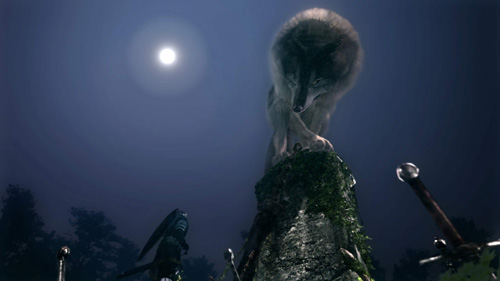
Niiiiice puppy, goooood puppy...
But not to fear, fellow gamers, there are still game developers who believe in hard games as a way of life, and have proven it can be successful in the open market. The best example of this is From Software, maker's of the Demon's/Dark Souls franchise.
To say that Dark Souls and the like are hard is an understatement, the primary game mechanic is actually dying. The game is designed with the expectation that you will die countless times before you reach the end. Unlike other RPGs that are designed to have a character progress to make a normal difficulty game easy through massive benefits, Dark Souls at best attempts to make a near impossible game possible. Even base level monsters are potentially lethal, environmental hazards are common, healing items are limited (sometimes harshly so), and bosses can one-shot players who come to the encounter unprepared.
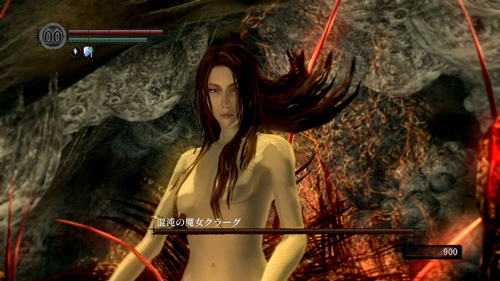
Nothing below the waist is easy
When asked about the difficulty curve of the latest game in the series, Dark Souls 2, co-director Yui Tanimura had this to say about the philosophy From Software has on the subject:
“Tanimura: Our aim is not to develop a difficult game. Our aim is to tune the difficulty to a level for players to be able to overcome and sense the highest sense of accomplishment possible. With this, the AI will be tuned to react more naturally to the player actions, but at the same time, the player controls and motions will be more natural and fitting to the actions carried out. I hope players will continue to learn from their mistakes and carry out multiple trial and error to conquer the challenges that await, and defeat the enemies that stand in the way. We try to tune so that the games difficulty is not a result of the players reflexes or ability to effectively use the controller, but will be based more on the player’s ability to learn from mistakes and be flexible in strategizing, and paying attention to all that happens around them.” (source: PC Gamer website)
The essence of this philosophy is not to consider difficulty something to be avoided or distanced from, but embraced. Challenges aren't hardships to be endured, they are obstacles to be overcome. The point of this? Games are a microcosm of the human experience, a place where we can explore common qualities in an entertaining environment. Facing down a hard game and snatching success from the claws of failure can, and does, give insight and offers strategies to dealing with real world problems.
Think of them as the self-help books of our time, just with an adrenaline rush and cool armor sets.